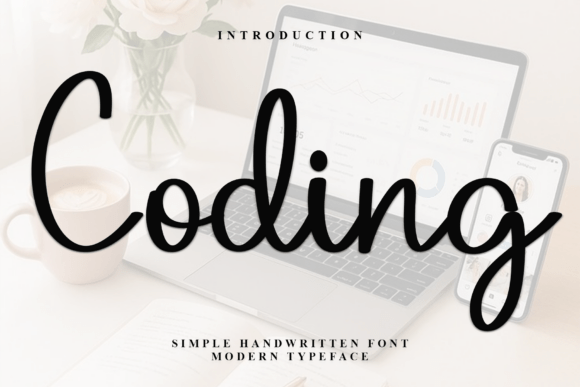
Coding Font: Festive Typography for Business Branding
It was 10 PM on a Tuesday, and I was staring at a mockup for a new holiday candle collection. The product photography was warm and inviting, the copy was written, but something felt off. The packaging looked generic. It lacked that specific spark of joy that makes a customer reach for a jar off the shelf during the busiest shopping season of the year. As a creative consultant helping small businesses refine their visual identity, I see this hurdle constantly. We often have great products, but our typography fails to communicate the emotion behind them. That is when I decided to test Coding, a festive and merry typeface that promises to capture the spirit of the holiday season with decorative elements and whimsical flair.
The result was an immediate shift in brand perception. Coding isn’t just another script font; it is a design asset that acts as visual shorthand for celebration. When applied to the candle labels, the typeface transformed a simple product into a gift-worthy experience. For small business owners, entrepreneurs, and makers, understanding how to leverage a display font like Coding can be the difference between a product that looks homemade and one that looks professionally curated. This review explores how this specific typeface performs in real-world branding scenarios, from packaging design to social media graphics, and why it deserves a spot in your commercial font library.
Translating Holiday Cheer into Professional Packaging
In the world of handmade goods and boutique retail, packaging is your silent salesperson. During my testing phase with a seasonal skincare line, we needed a header font for limited-edition gift boxes. Standard serif fonts felt too serious, while typical handwritten fonts often lacked the legibility required for retail shelves. Coding bridged this gap perfectly. Its structure retains the elegance of a premium font while incorporating decorative swashes that feel intentional rather than messy.
We used Coding for the primary product name on the box lid. The whimsical flair of the letterforms added a touch of enchantment without sacrificing clarity. This is crucial for packaging design. You want customers to feel the festive mood instantly, but they also need to read what the product is within seconds. Coding achieves this balance by maintaining strong baseline alignment even with its ornamental details. For business owners creating stickers, thank-you cards, or product tags, this font provides instant polish. It signals to the customer that you have put thought into every detail of their unboxing experience, which builds trust and encourages repeat purchases.
Elevating Digital Storefronts and Social Media
Your online presence requires the same level of intentionality as your physical products. When updating Instagram templates and website banners for the holiday rush, readability on mobile screens becomes the priority. I tested Coding across various digital formats to see if its decorative nature held up at smaller sizes. As a display font, it shines brightest in headlines, promotional graphics, and short phrases. It is not designed for body text or long descriptions; instead, it serves as an anchor point that draws the eye.
For an online shop banner announcing a "Holiday Sale," Coding provided the necessary visual weight to stop scrollers in their tracks. The festive personality of the typeface did the heavy lifting, allowing us to keep the rest of the graphic clean and uncluttered. This is a key principle in modern typography: let your creative font handle the emotion so your layout can handle the information. When using Coding for social media graphics or digital ads, ensure you are utilizing high-resolution files to maintain crisp edges. Blurry text kills conversion rates faster than almost anything else. By treating this font as a headline hero, you create a consistent brand identity that feels celebratory across all digital touchpoints.
Strategic Font Pairing for Balanced Brand Identity
A common mistake I see non-designers make is letting a decorative script overpower the entire design. Coding is a statement piece, which means it needs a supporting actor. To make your business look polished and professional, you must master font pairing. During the candle label redesign, we paired Coding with a clean, geometric sans serif font for the scent notes and volume information. The contrast between the merry, flowing lines of Coding and the structured stability of the sans serif created a sophisticated editorial look.
- For Logos: Use Coding for the brand name or a seasonal sub-brand, paired with a minimalist sans serif for the tagline to ensure scalability.
- For Menus: Utilize Coding for category headers like "Winter Warmers" or "Festive Treats," while keeping item descriptions in a highly readable serif or sans serif.
- For Web Design: Reserve Coding for H1 and H2 headers to establish hierarchy, using web-safe system fonts for body copy to improve load times and accessibility.
- For Stationery: Combine Coding with a classic serif font for business cards to blend traditional professionalism with seasonal warmth.
This strategic approach ensures that your branding remains accessible. While Coding adds the festive spirit, your supporting typography ensures the customer can actually navigate your menu, read your ingredients list, or find your contact information. Consistency in these pairings across all materials reinforces brand recognition.
Practical Considerations for Commercial Use
Before you commit to using any new typeface for your business, you must look beyond aesthetics. As a consultant, I always advise clients to verify the technical and legal aspects of their design assets. When integrating Coding into your workflow, check the included file formats to ensure compatibility with your software, whether you are using Adobe Illustrator, Canva, or Procreate. Access to OpenType features like alternates and ligatures can significantly enhance the custom feel of your logo design or packaging titles, preventing the text from looking like a default preset.
Equally important is understanding commercial font licensing. Just because a font is available for download does not mean it is cleared for use on merchandise, client work, or digital downloads. Always review the license agreement to confirm it covers your specific business activities. If you plan to use Coding on products intended for resale, such as printed mugs or apparel, ensure your license includes commercial merchandising rights. Additionally, consider multilingual support if your customer base speaks multiple languages; nothing breaks immersion like a festive English headline followed by broken characters in a secondary language.
Ultimately, Coding is more than just a pretty set of letters. It is a tool for storytelling. In a marketplace saturated with generic holiday visuals, this typeface offers small businesses a way to inject genuine personality and warmth into their brand. Whether you are refreshing a café menu, designing a boutique tag, or building a cohesive Instagram grid, Coding provides the decorative confidence needed to stand out. By pairing it wisely, respecting readability constraints, and ensuring proper licensing, you can transform your seasonal branding from merely functional to truly memorable. Good design is an investment in your customer's experience, and sometimes, the right font is the simplest way to make that investment pay off.